The wall we meet most often in South Florida is drywall over metal studs: in about 9 out of 10 interior-wall installs, that is what sits behind the paint. The other wall we meet often is concrete hiding behind drywall, usually on the outside edge of the house, while wood studs are rare here. We choose the drill bit, anchors and bolts for the wall in front of us, and metal studs never change your price.
Most customers don't know which wall they have, and they don't need to. Our technician checks the wall before drilling and picks the right hardware for it, whichever wall bracket you choose. Here is what we usually find, how we fasten to each wall, and what it means for hidden cables.
Based on our own installs across Miami-Dade, Broward and Palm Beach counties. Last updated October 2026.
The short version
| Wall behind the paint | How often we see it | Drill bit | Fastener | Cables hidden inside the wall |
|---|---|---|---|---|
| Drywall over metal studs | Most common: about 9 in 10 interior-wall jobs | Metal-cutting bit | Anchors made for drywall and metal studs | Usually yes; insulation inside can slow us down |
| Concrete behind drywall | Frequent, mostly outside walls | Masonry (concrete) bit | Plastic expansion anchors and bolts | Harder; sometimes an external cord cover is better |
| Drywall over wood studs | Rare in our jobs | Wood bit | Lag bolts into solid wood | Usually yes; a horizontal stud can stop us |
Does the wall type change the price?
For metal studs, wood studs and the insulation inside a wall: no. None of them has a line on our price list, and the price you were quoted stays the same. Concrete, brick and stone do have a $44 line on the price list. If you tell us about the wall when you book, it is in your total from the start. If we only find out on arrival, we don't add it. See how our pricing works.
Metal studs: the wall most people don't know they have
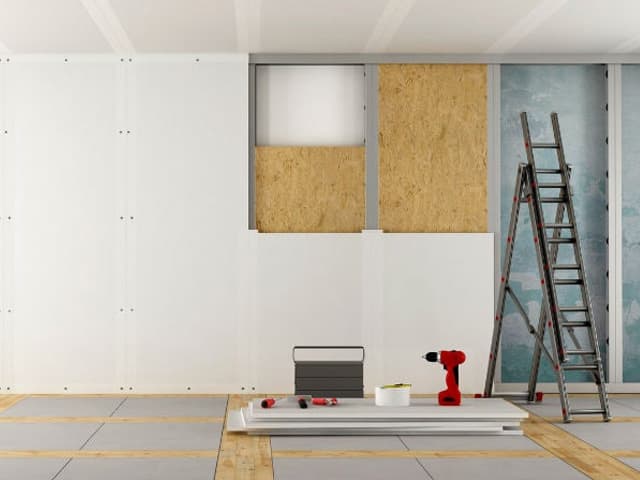
Metal studs are thin steel channels that hold the drywall up. From the room they are invisible, so most customers are surprised to hear they have them. Some installers add a fee when they find metal studs. We don't: you pay the price you were quoted.
Metal studs need different hardware from wood. The lag bolts that come with many mounts are meant for wood, and Monoprice's manual for one of its wall mounts says its hardware is not designed for walls with steel studs. So on metal studs we use anchors made for drywall and metal studs, together with a drill bit meant for metal. On a 100-inch install in a North Miami Beach conference room, for example, we used heavy-duty snap toggles, one at each stud location behind the mount plate.
What is the wool inside the wall?
Many metal-stud walls have soft insulation packed between the studs. It is sound-attenuation insulation, made of mineral wool or fiberglass, and builders use it to quiet the noise between rooms and apartments. It can also help a wall reach a fire rating. Owens Corning says its fiberglass batts improve a wall's sound rating by 4 to 11 STC points and that walls built with them can reach up to a 2-hour fire rating, and Johns Manville makes a mineral-wool version that melts above 2,000°F.
For us it matters only when you want cables hidden inside the wall. The batts are made to fit snugly between the studs, so a cable can't just drop through the wall; it has to be worked through the insulation. That makes the job harder, but it is standard practice for us and we don't charge extra for it.
Concrete behind the drywall
Concrete is the other wall we meet often. It is usually an outside wall, the kind with a window facing the street. From inside the room it looks like any other painted wall: ordinary drywall in front, a thin wood strip behind it, and the concrete behind that. A Florida building-envelope paper describes this setup: drywall on wood or metal furring attached to the inside of the concrete block.
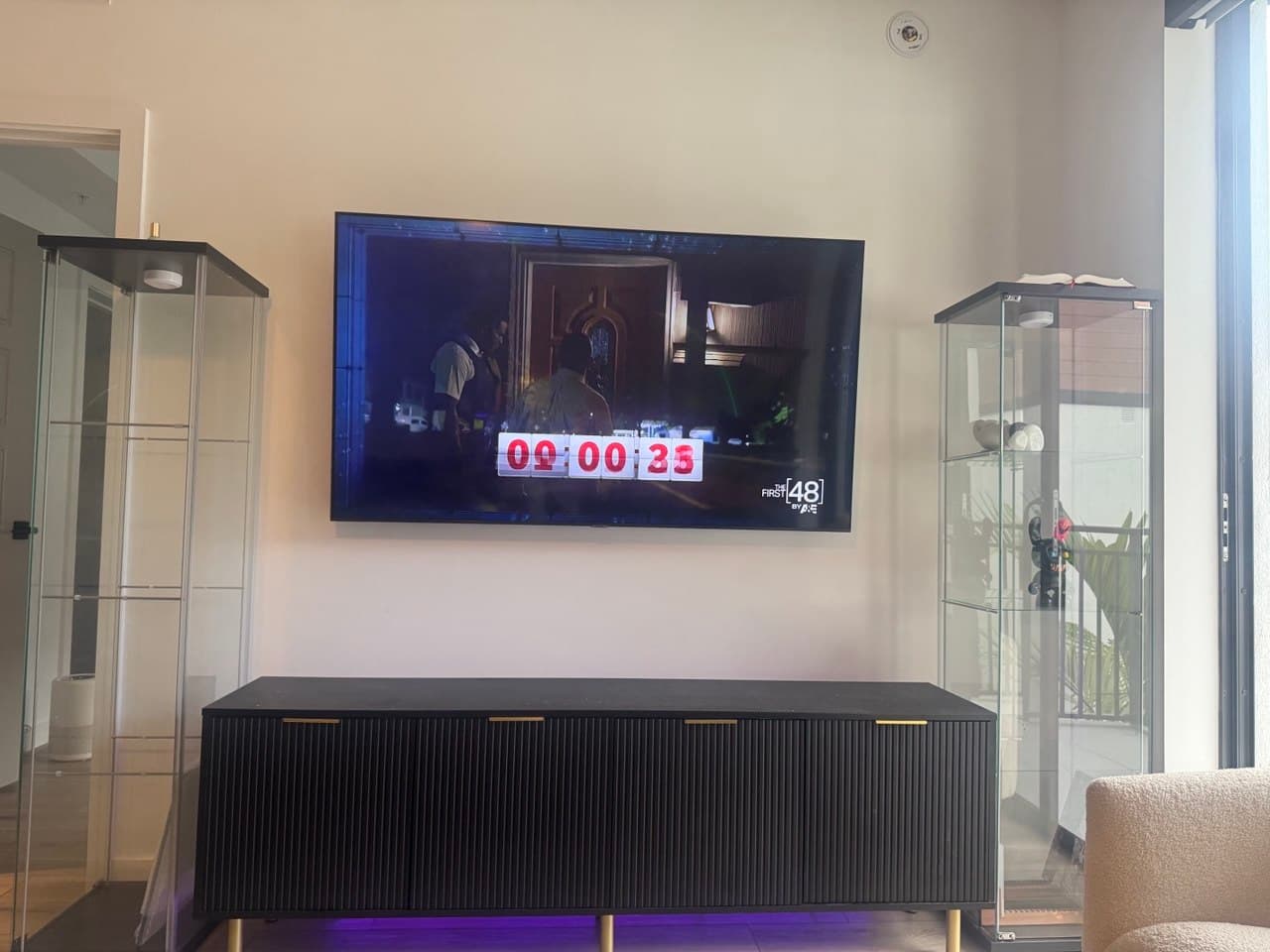
Customers often don't know it is concrete, because all they see is the drywall. We find out on site, when the technician checks the wall. Then we switch to a masonry bit, drill into the concrete and set plastic expansion anchors: when the bolt is tightened, the anchor spreads inside the hole and grips the concrete, so the bracket stays put. For a finished job, see an 85-inch TV on a solid concrete wall in Weston.
There is very little room between the drywall and the concrete, so hiding cables inside this kind of wall is harder, and sometimes an external cord cover is the better choice.
Wood studs: rare here, with one catch
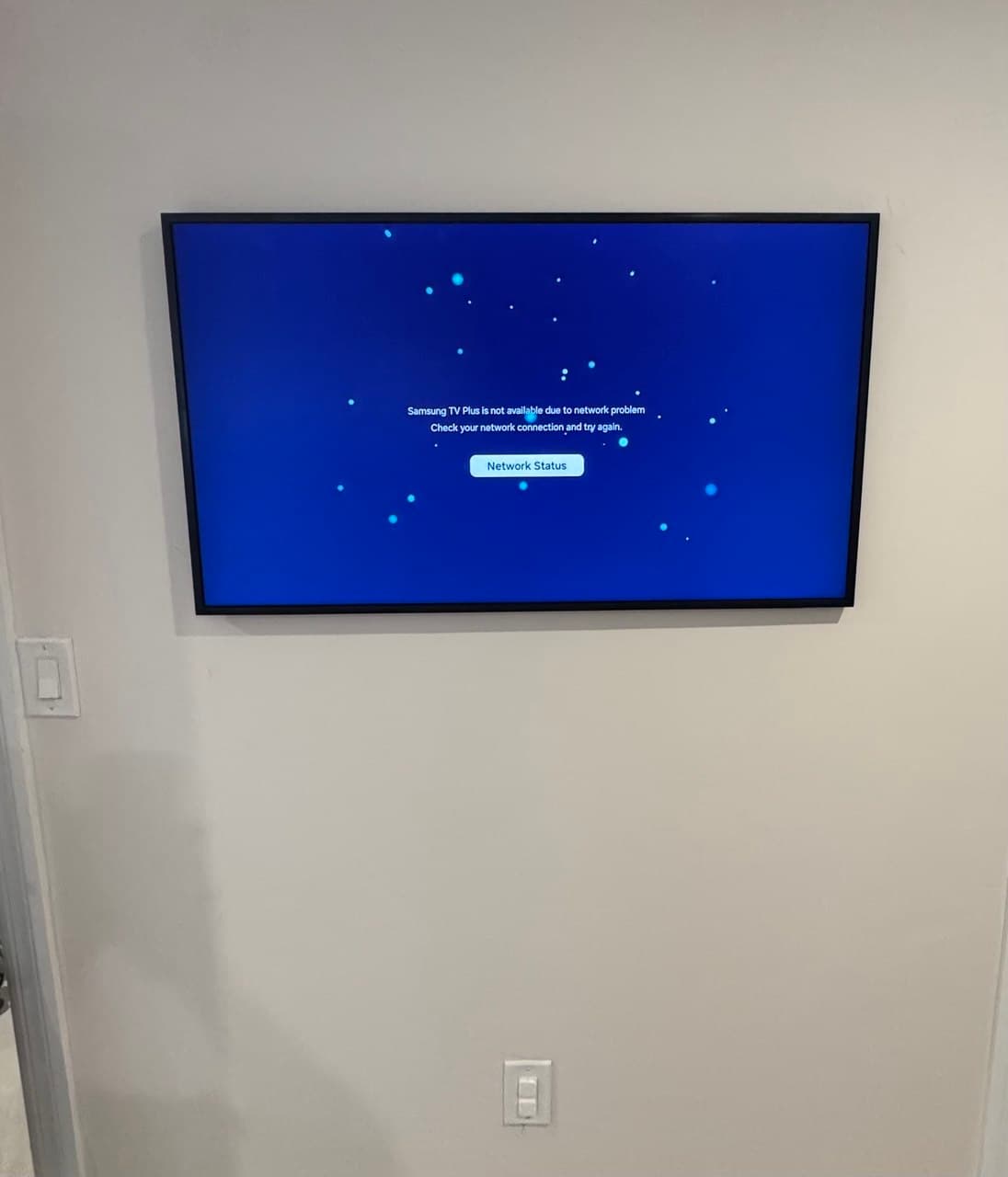
We rarely meet wood studs in South Florida. When we do, we use a wood bit and standard lag bolts driven into solid wood, as on this 50-inch install on wood studs in Boca Raton.
The catch is a horizontal stud. Wood-framed walls sometimes have a horizontal piece of framing between the studs, and it blocks the path of a cable through the wall. When that happens, we switch to an external cord cover. Because wood studs are rare here, horizontal ones are rare too.
How we find the studs
Studs are usually spaced 16 or 24 inches apart, according to Home Depot. For large TVs we anchor into two studs for a secure fixing. On stud walls, the technician looks for the studs with a magnet or a stud finder before any TV goes up, and the TV doesn't go on the wall until we are sure it will be held securely.
Plastered walls are the hard case. The stud finder gets lost and points to the wrong spot, and magnets often can't pick up any screws. Then our technicians rely on experience: studs usually sit next to an electrical outlet, so we measure from the outlet and work out where the stud should be. If that doesn't settle it, the technician drills one small hole at the height of the mount to confirm there is a stud behind it.
Stone, tile and marble
Harder surfaces get their own write-ups: solid limestone in Pinecrest, a marble slab wall in Weston and a tiled wall in a Weston office.
Wall types by area
Our Miami, Fort Lauderdale and West Palm Beach pages each have a local guide to the walls we meet there. A quick overview:
| Area | What we usually find | Examples |
|---|---|---|
| Miami (Miami-Dade) | Poured-concrete high-rises; older concrete block (CBS) homes, mostly built before 1980; metal-stud drywall in loft conversions and new construction; plaster and coral rock in 1920s–30s homes; some wood-frame homes | Brickell, Downtown, Edgewater, Wynwood, Little Havana, Allapattah, Coconut Grove, Upper East Side |
| Fort Lauderdale (Broward) | Reinforced poured-concrete condos from the 1970s and 80s; metal-stud drywall in Flagler Village, and in downtown buildings with concrete outer walls; CBS single-family homes from the 1950s to the 1990s, many renovated | Galt Mile, Flagler Village, Victoria Park, Coral Ridge |
| West Palm Beach (Palm Beach County) | Poured-concrete high-rises downtown; mid-century CBS along the Intracoastal; original plaster over lath or hollow clay tile in some 1920s homes; newer CBS and drywall on the west side | Downtown, SoSo, El Cid, the west side |
The wall can differ even between neighbors. In Fort Lauderdale's Victoria Park, 1940s block homes sit next to modern new builds, so we check every wall before drilling.
Not sure what is behind your wall?
You don't have to know. Book online or call (754) 340-1000, and our technician checks the wall before drilling and picks the right bits, anchors and bolts for it. Same-day or next-day installs are often available in Miami, Fort Lauderdale and West Palm Beach, subject to availability.
Related: How much does it cost to mount a TV in South Florida? and How long does it take to mount a TV in South Florida?