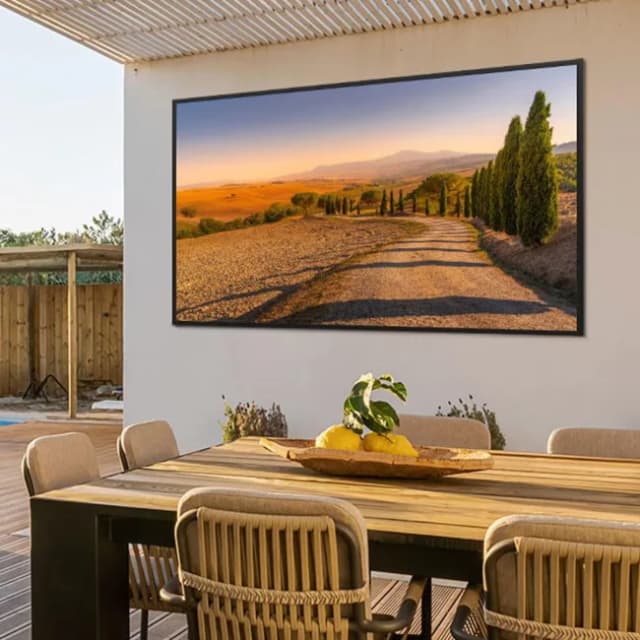
Montaje de Frame TV
Drywall, ladrillo, piedra, concreto. Pernos localizados, nivelado garantizado.
Glenn Curtiss beat the Wright Brothers in a race, invented the seaplane, and then decided to build an entire city from One Thousand and One Nights in a Florida swamp. Men in Arab dress on white horses charged an arriving train at the 1926 grand opening. The streets are named Ali Baba and Sharazad. Twenty of his Moorish Revival buildings still stand — the largest concentration in America. TV mounting from $62, same day, approaching the city's centennial.
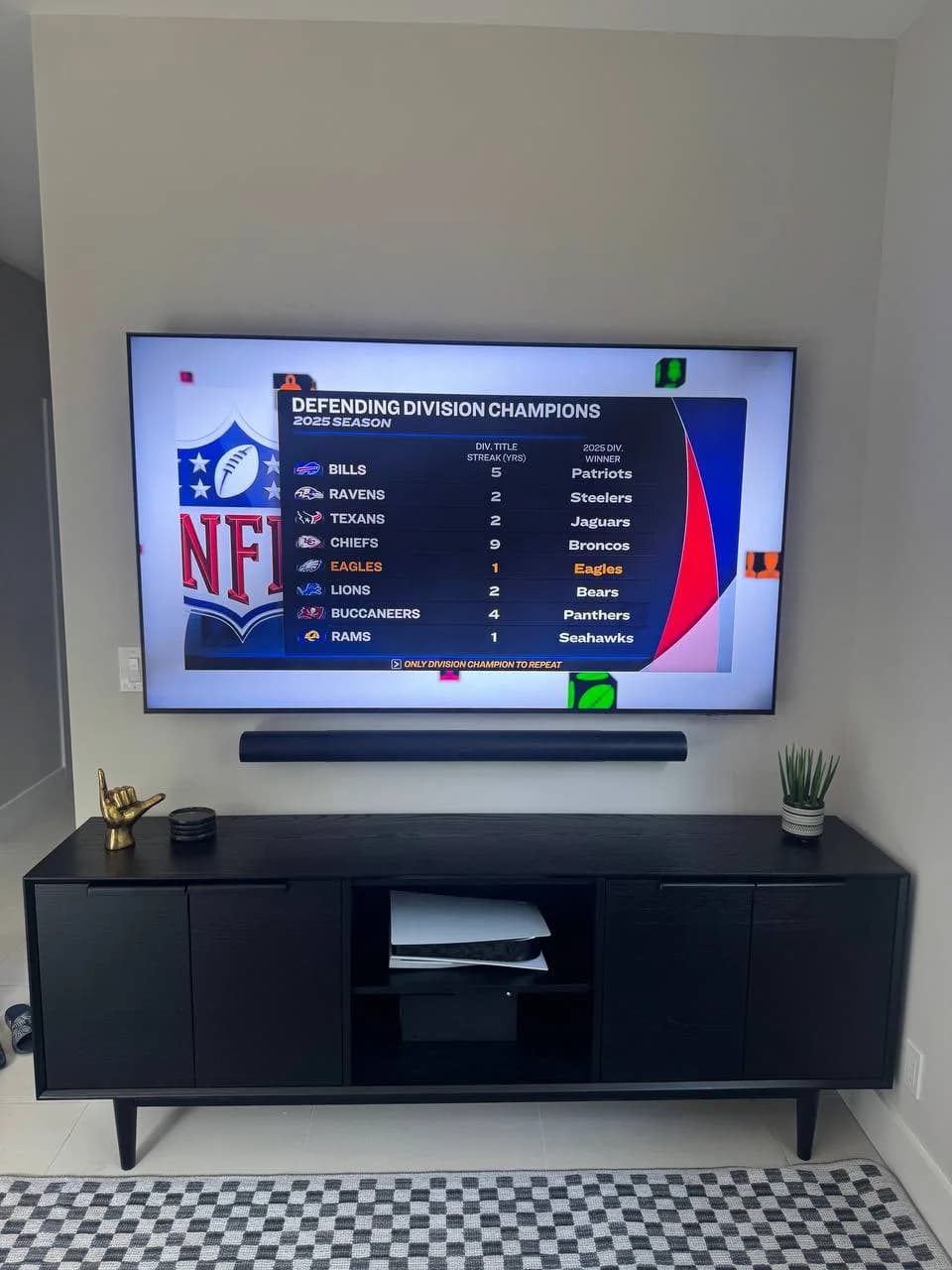
Elige el tamaño para ver el precio fijo. Sin sorpresas — tu cotización final queda confirmada antes de empezar.
Desde una sola pantalla plana hasta una instalación completa de muro multimedia con cables ocultos — tus expertos en montaje cubren cada casa de Opa-locka.
Drywall, ladrillo, piedra, concreto. Pernos localizados, nivelado garantizado.
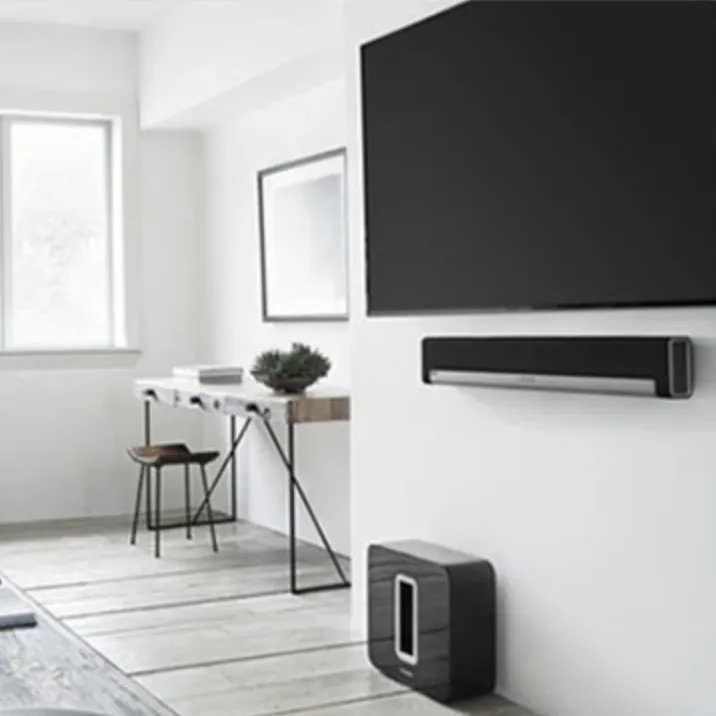
Montada al ras debajo de tu TV con el cableado oculto.
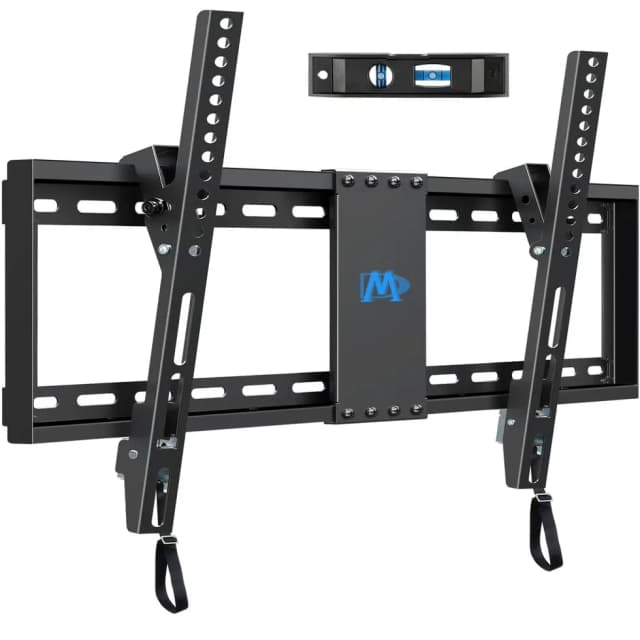
Soportes fijos, inclinables o articulados, del tamaño exacto para tu TV.
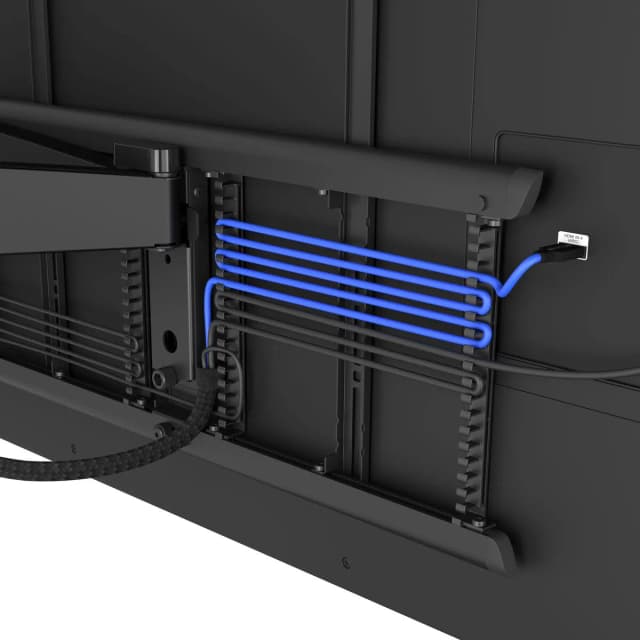
Canaleta externa o dentro de la pared — tú decides.
Elige el tamaño y los extras. Toma unos 30 segundos — sin cuenta, sin pago.
Te llamamos o enviamos un mensaje en 15 minutos durante horas hábiles para confirmar la cita el mismo día o al siguiente.
Puntuales, uniformados y con todo lo necesario. La mayoría de los trabajos en menos de una hora. Aceptamos efectivo, tarjeta o Zelle.
Sin tarifas ocultas ni sorpresas por hora. Conocerás el total antes de hacer el primer agujero.
Instalado por gente que hace esto todos los días — no como pasatiempo. Con garantía, seguro real y más de 150 reseñas públicas.
Solo técnicos con experiencia. Cada instalador lleva más de 5 años montando pantallas de todos los tamaños.
Dentro de la pared o con canaleta externa. Tu instalación queda como sala de exhibición — sin cables colgando.
Drywall, yeso, ladrillo, piedra, concreto. Soportes fijos, inclinables o articulados.
Reserva antes del mediodía y te enviamos un técnico el mismo día en todo el sur de Florida.
$1M de responsabilidad civil. Cada trabajo se nivela con láser y se prueba de tracción antes de retirarnos.
La mayoría de los trabajos en menos de 60 minutos. Cubrezapatos, lonas en el piso y todo limpio al final.
Ves el total antes de empezar. Aceptamos efectivo, tarjeta, Apple Pay y Zelle.
Más de 150 reseñas de 5 estrellas. Somos el servicio de instalación de TVs mejor calificado de la región.
Reseñas reales de Google de casas reales — actualizadas en vivo y con fotos de las instalaciones.
Marian vino y volvió a montar nuestra TV porque otra persona había hecho un mal trabajo. Es fantástico y nos salvó el día. Son increíbles.
Marian hizo un trabajo increíble — puntual, se aseguró de que mis 3 TVs (42", 55", 65") quedaran exactamente como las quería. Ocultó los cables dentro de la pared sin dañarla. 100% satisfecho.
Llamé a última hora y vinieron unas horas después. Soporte Frame — me encanta cómo quedó. Profesional, puntual, excelente trabajo.
Excelente, excelente trabajo. Sin pensarlo dos veces, los volveré a contratar.
Samsung de 75" instalada en muy poco tiempo. Cables dentro de la pared. Incluso regresaron sin costo cuando la TV resultó estar fallada. Puntuales, ordenados, profesionales.
Rápido y eficiente. Muy buen trabajo. ¡Me encanta cómo se ve!
Real jobs we’ve done in Opa-locka and across Miami-Dade County.
 Miami-Dade County
Many South Florida homes have feature walls of native Keystone limestone. Beautiful. Heavy. Tricky to mount on. Here's the technique we've refined over 200+ jobs.
Read story All of South Florida
La instalación toma menos de una hora — lo que cuenta es qué tan pronto llega el técnico. Esto es lo que debes saber en el sur de la Florida.
Read story All of South Florida
DIY, a big-box add-on, or a local specialist team? An honest look at the three ways to get your TV on the wall in South Florida — and how to pick.
Read storyToca cualquier ciudad para ver precios locales, disponibilidad y la misma tarifa fija que ofrecemos en Opa-locka.
Todo lo que los clientes preguntan antes, durante y después de la instalación.
Searching for professional TV mounting in Opa-locka, FL? TV Mount Hero is Miami-Dade County's highest-rated TV wall mount installation service — licensed, insured, and available same day throughout Opa-locka. We serve this extraordinary city — from the Moorish Revival historic district to the CBS block residential neighborhoods north of Miami — with flat-rate pricing from $62, same-day arrival, and the complete Spanish and Haitian Creole service that Opa-locka's multicultural community deserves. Glenn Hammond Curtiss was the most famous American aviator of the early 20th century before the Wright Brothers' names became the ones history remembered most. He built the first practical seaplane. He flew the first long-distance airplane flight in America — a 150-mile journey from Albany to New York City in 1910 that won the New York World prize and made him a national sensation. He beat the Wright Brothers in an air race. His motorcycles set world speed records. And then, in the early 1920s, having made his fortune and looking for his next act, Glenn Curtiss went to South Florida and decided to build cities. He built three. With business partner James Bright, he created Hialeah — themed around Spanish Colonial architecture — and Country Club Estates, which became Miami Springs, themed after American pueblo architecture. And then, on 1,000 acres of former Seminole hunting ground in northwestern Miami-Dade County that the Seminole people had called "Opa-tisha-wocka-locka" — meaning "a big island covered with many trees and swamps" — Curtiss decided to do something unprecedented in the history of American urban planning. He hired Bernhardt Emil Muller, a graduate of the Ecole des Beaux-Arts in Paris, and told him to design an entire city in the Moorish Revival style — domes, minarets, horseshoe arches, arabesque tile work, and every architectural element drawn from North African, Spanish Islamic, and Persian sources. Muller had never seen Moorish architecture in person. He worked entirely from books, photographs, and the 1924 film The Thief of Baghdad, which Curtiss screened repeatedly as a design reference. Over 80 buildings were designed. The streets were named Ali Baba Avenue, Sharazad Street, Aladdin Street, Sinbad Avenue, and Caliph Street. On January 8, 1927, the Arabian Nights Fantasy Festival celebrated the new city's existence: a Pullman railcar arrived at the brand-new station as men in Arab costumes on white horses charged the train in a theatrical welcome, only to fall back and invite the arriving dignitaries — including Florida Governor John Martin — to witness what Glenn Curtiss had built. The 1926 hurricane struck before the Arabian Nights Fantasy Festival even happened. The 1929 stock market crash followed. Curtiss died in 1930. The dream of a complete Moorish city in Florida died with the land boom. Of the 80+ buildings designed, 20 survive. They are listed on the National Register of Historic Places as the Opa-locka Thematic Resource Area — the largest concentration of Moorish Revival architecture anywhere in the United States. The Opa-locka Company Administration Building, now City Hall, stands on the curved boulevard named Sharazad, its minarets and horseshoe arches intact after nearly 100 years. As of 2025, the City Commission has unanimously approved its complete restoration ahead of Opa-locka's centennial in 2026. Today Opa-locka has approximately 16,100 residents across 4.2 square miles in northwestern Miami-Dade County, adjacent to Hialeah, Miami Gardens, and North Miami. The demographic character is 51.7% Hispanic or Latino and 43.1% Black or African American — a genuinely multicultural community where Spanish and Haitian Creole are the languages of daily life alongside English. The city has faced significant challenges over the decades — economic hardship, infrastructure gaps, and the consequences of being the most architecturally extraordinary small city in Florida that most people have never heard of. The centennial restoration campaign and the heritage trail project are writing a new chapter. TV Mount Hero will be there for every installation call as the city approaches its 100th year. --- **📍 Opa-locka by Zone — Historic Moorish Core and CBS Block Residential** **The Moorish Revival historic district.** The concentrated historic core around Ali Baba Avenue, Sharazad Boulevard, Perviz Avenue, and the surrounding streets contains the 20 surviving Moorish Revival buildings and the residential blocks that grew up around them. Historic City Hall on Sharazad — with its multiple domes, elaborate Moorish tilework, and minarets visible from the surrounding streets — is the most important surviving example. The Opa-locka railroad station, the Harry Hurt Building, and the other surviving 1920s structures share the construction techniques of their era: hollow clay tile, early poured concrete, and the hand-applied stucco finishes that Muller's designs required. For TV mounting in the historic district's residential buildings — the CBS block and concrete construction that grew up around the Moorish landmarks from the 1940s through the 1970s — we assess every wall individually. The proximity of historic buildings and the active restoration effort means that precision work and clean installations are especially important in this zone. **The CBS block residential grid.** The majority of Opa-locka's 4.2 square miles is occupied by CBS block single-family homes and low-rise apartment buildings from the postwar era through the 1970s. These homes reflect the city's growth wave after World War II, when the aviation and industrial activity of the adjacent Opa-locka Executive Airport drove residential development throughout the city's western and southern zones. CBS block construction throughout the single-family stock — solid concrete block exterior walls requiring masonry hardware, drywall interior partitions in renovated spaces. The same technical requirements as every other Miami-Dade CBS block neighborhood, applied to a city whose backstory is unlike any other in Florida. **The Opa-locka Executive Airport corridor.** Opa-locka Executive Airport — one of Miami-Dade County's general aviation airports — borders the city to the north and west, creating the employment and economic activity corridor that has shaped the city's character since the 1940s. The residential neighborhoods adjacent to the airport have the practical, working-community character of an aviation-adjacent city. CBS block construction, standard masonry hardware requirements. --- **🕌 The Largest Moorish Revival Concentration in America — One Hundred Years** Opa-locka's centennial arrives in 2026. The city that Glenn Curtiss dreamed into existence from a Florida swamp, a Paris-trained architect who had never seen Moorish architecture in person, and a 1924 Hollywood film about The Thief of Baghdad is approaching its 100th year with the same 20 surviving buildings that outlasted the hurricane, the stock market crash, the land boom collapse, and every subsequent decade of difficulty. The centennial restoration of City Hall — the Opa-locka Company Administration Building that architect Muller described as "the most elaborate" of his designs for Curtiss — will return one of the most architecturally significant buildings in South Florida to its original intended condition. The heritage trail project, the two-time Emmy-winning journalist who mapped the city's architectural story, the historian from HistoryMiami Museum who calls Opa-locka "unique in its Arabian Nights theme" among the Florida land boom cities — all are contributing to a centennial narrative that frames Opa-locka not as a failed dream but as the most extraordinary surviving example of themed urban planning in American history. TV Mount Hero serves Opa-locka in 2025 and will be here in 2026 — the centennial year. Every installation we do in this city is in a community that has earned the right to be served with the same professionalism we bring to Coral Gables, Key Biscayne, and every other Miami-Dade community we serve. --- **🌍 Opa-locka's Community — Spanish, Haitian Creole, and Full-Service** With 51.7% Hispanic or Latino residents and 43.1% Black or African American residents — including a significant Haitian community — Opa-locka is a genuinely multilingual city where the language of the service provider matters enormously. **Nou pale Kreyòl ayisyen** — sèvis montaj televizyon disponib an Kreyòl pou tout rezidan ayisyen yo nan Opa-locka. Nou konprann kominote a, nou pale lang ou, e nou bay sèvis pwofesyonèl nan nivo ki pi wo a. Rele oswa voye mesaj (754) 340-1000. Nuestro equipo habla español completamente — desde la primera llamada hasta la instalación terminada, servicio disponible en español para la comunidad hispana y latinoamericana de Opa-locka, sin barreras de comunicación y sin malentendidos sobre altura, posición o manejo de cables. In a city where miscommunication between a service technician and a homeowner produces an installation at the wrong height on the wrong wall, TV Mount Hero's complete Spanish and Haitian Creole service is not a convenience — it is the foundation of a correctly completed job. --- **📊 TV Mounting by the Numbers — Opa-locka** **80+** — Moorish Revival buildings designed by architect Bernhardt Muller for Glenn Curtiss. Twenty survive. Each is on the National Register of Historic Places. **1927** — year of the Arabian Nights Fantasy Festival, when men in Arab costumes on white horses charged an arriving train to celebrate the city's opening, with Florida's Governor in attendance. **2026** — Opa-locka's centennial year and the year of City Hall's complete restoration — the most important architectural event in the city's history since the 1926 hurricane that ended Glenn Curtiss's dream. **51.7%** — Hispanic or Latino residents, served completely in Spanish by TV Mount Hero. **$62** — our flat-rate starting price for TV mounting in Opa-locka. Confirmed before we drill. In Spanish or Haitian Creole if preferred. Never changes. **1 to 3 hours** — typical same-day arrival time anywhere in Opa-locka. --- **🔧 5 Reasons DIY TV Mounting Fails in Opa-locka** **1. Postwar CBS block construction throughout the city stops standard anchors.** Opa-locka's residential housing stock is CBS block from the 1940s through the 1970s — solid concrete exterior walls where standard drywall anchors fail immediately under the weight of any television. **2. Historic district hollow clay tile construction requires specialized hardware.** The oldest surviving buildings in Opa-locka's historic core used hollow clay tile — a pre-CBS block masonry material from the 1920s. Standard CBS block anchors are inappropriate for hollow tile; the collapse of the tile cell produces immediate anchor failure. Historic district work requires individual substrate assessment. **3. Language barriers produce installations at the wrong height.** When a technician and homeowner cannot communicate clearly in a shared language, the TV goes at the wrong height on the wrong wall. Our complete Spanish and Haitian Creole service eliminates this entirely in Opa-locka's multilingual households. **4. Decades of renovation create unpredictable wall substrates.** Opa-locka's CBS block homes have been renovated through multiple ownership generations. Drywall applied over CBS block, renovation-era additions in different materials, and the full range of informal construction modifications mean that no assumption about wall type is safe without probing first. **5. Compact residential layouts require precise TV height calculation.** The CBS block homes of Opa-locka's postwar residential grid have compact living rooms where the sofa-to-wall distance is frequently 8 to 10 feet — close enough that standard "48 inches to center" mounting height is too high for comfortable viewing. We calculate the correct height from actual room geometry on every installation. --- **❓ Frequently Asked Questions — TV Mounting in Opa-locka, FL** **How quickly can you arrive in Opa-locka?** Same-day appointments available throughout Opa-locka seven days a week. Typically 1 to 3 hours from booking. Call or text (754) 340-1000. **Do you serve the Haitian community in Opa-locka in Haitian Creole?** Yes — completely. Haitian Creole service from the first call through installation completion. Nou pale Kreyòl. Rele (754) 340-1000. **Do you serve Spanish-speaking residents in Opa-locka?** Yes — completely. Spanish service available throughout the entire appointment. Nuestro equipo habla español completamente. Llame al (754) 340-1000. **What type of walls do Opa-locka homes have?** CBS block single-family construction from the 1940s through the 1970s — solid concrete exterior walls requiring masonry hardware, with drywall interior partitions in renovated spaces. Historic district buildings may have hollow clay tile construction requiring individual assessment. We probe every wall before drilling. **What is your price for TV mounting in Opa-locka?** Flat-rate from $62. Confirmed before we drill. In Spanish or Haitian Creole if preferred. Never changes. --- Our full range of TV mounting services in Opa-locka includes: flat-screen TV wall mounting on CBS block, hollow clay tile, drywall, and all wall types; Samsung Frame TV installation with no-gap mount and laser alignment; full-motion, tilting, and fixed bracket installation; soundbar wall mounting; in-wall cable and wire concealment; external cord cover installation; above-fireplace TV mounting; TV dismounting and remounting; and multi-TV installation. All flat-rate from $62 — no hidden fees. Nou pale Kreyòl ayisyen — sèvis konplè disponib an Kreyòl pou tout rezidan ayisyen yo nan Opa-locka. Nuestro equipo habla español — servicio completo disponible en español para toda la comunidad hispanohablante de Opa-locka. TV Mount Hero is Opa-locka's trusted same-day TV wall mount installation company. Every technician is Florida-licensed, background-checked, and carries $1M general liability insurance. Laser-level on every installation. Pull-test on every anchor. 5.0★ on Google with 150+ verified five-star reviews. Book same-day professional TV mounting in Opa-locka, FL by calling or texting (754) 340-1000 — available 7 AM to 10 PM, seven days a week. Free quote confirmed within 15 minutes. TV Mount Hero serves Opa-locka ZIP codes 33054, 33055, 33056.